

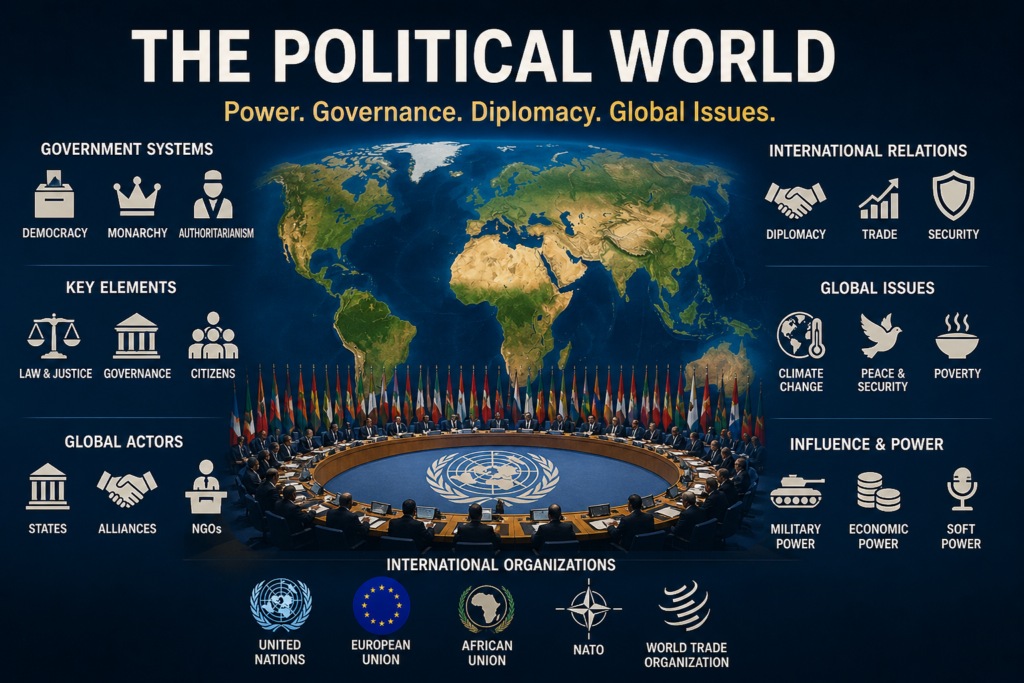
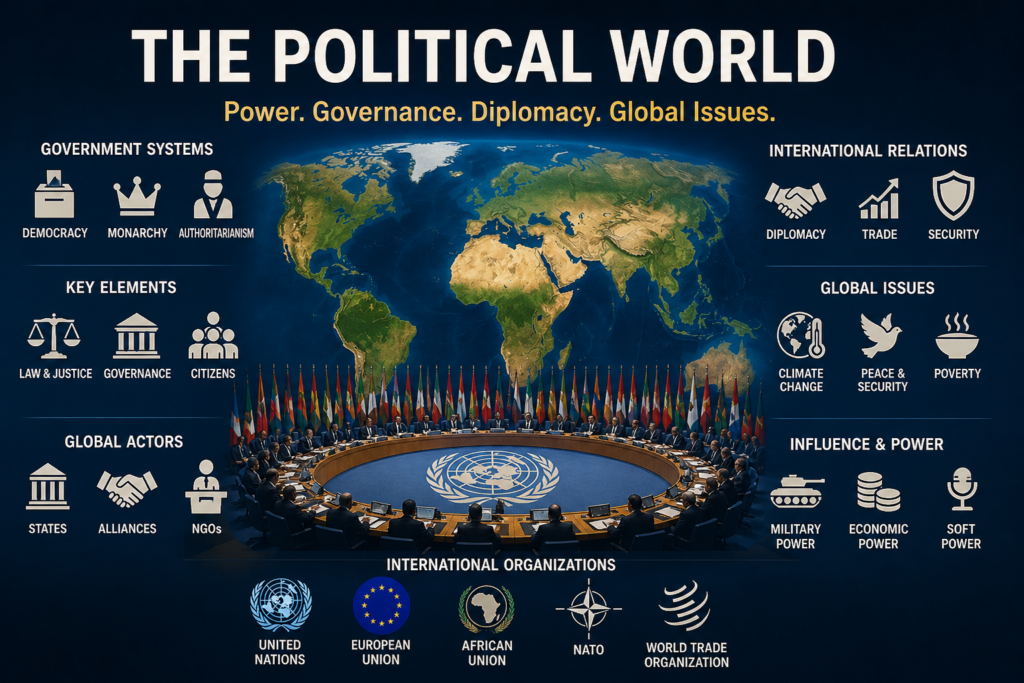
Describtion:The political world refers to how power, leadership, and decision-making are organized and exercised within and between countries. It includes governments, political systems, laws, international relations, and institutions that shape how societies are governed. Around the world
🌍 Global Political Strategy (Neutral Framework)
1. 🧭 Power (Domestic + International)
Political actors—whether states or leaders—usually start with:
- Hard power: military strength, law enforcement, economic control
- Soft power: culture, diplomacy, international reputation
- Institutional power: control over laws, courts, bureaucracy
👉 Globally, successful states balance all three.
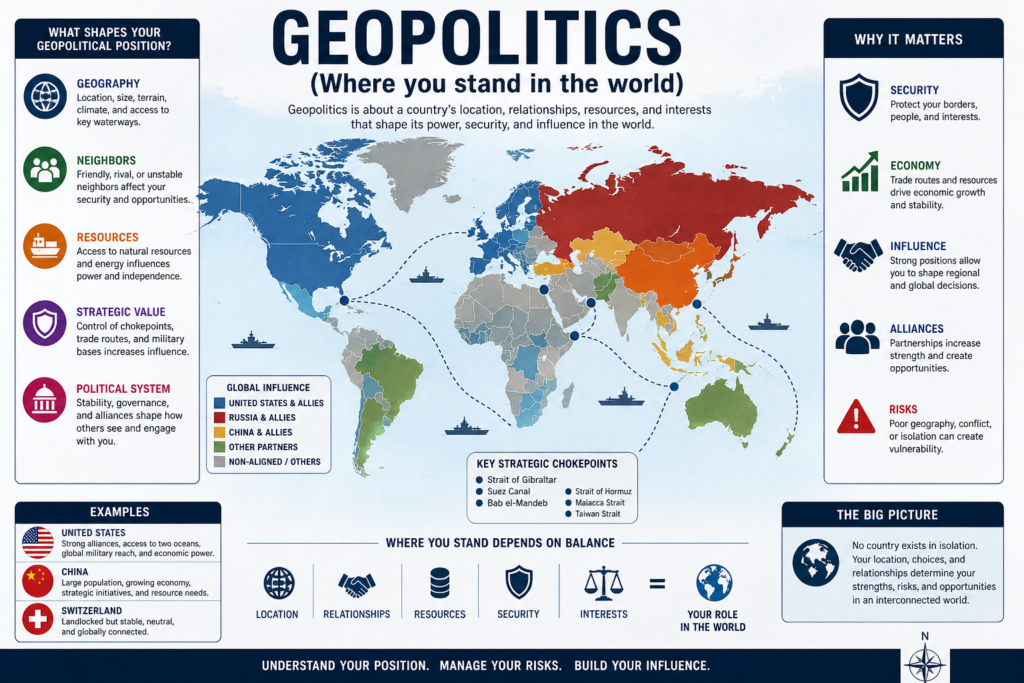
2. 🌐 Geopolitics (Where you stand in the world)
Countries design strategy based on:
- Neighbors and regional stability
- Trade routes and resources
- Alliances and rivalries
- Global institutions (UN, AU, NATO, etc.)
Example patterns:
- Regional cooperation blocs (economic + security)
- Strategic neutrality vs alignment with major powers
3. 🏛️ Internal Stability Strategy
Most governments focus on:
- Maintaining law and order
- Preventing internal conflict
- Managing ethnic, religious, or regional diversity
- Delivering basic services (health, education, jobs)
Stable internal governance is usually the foundation of external influence.
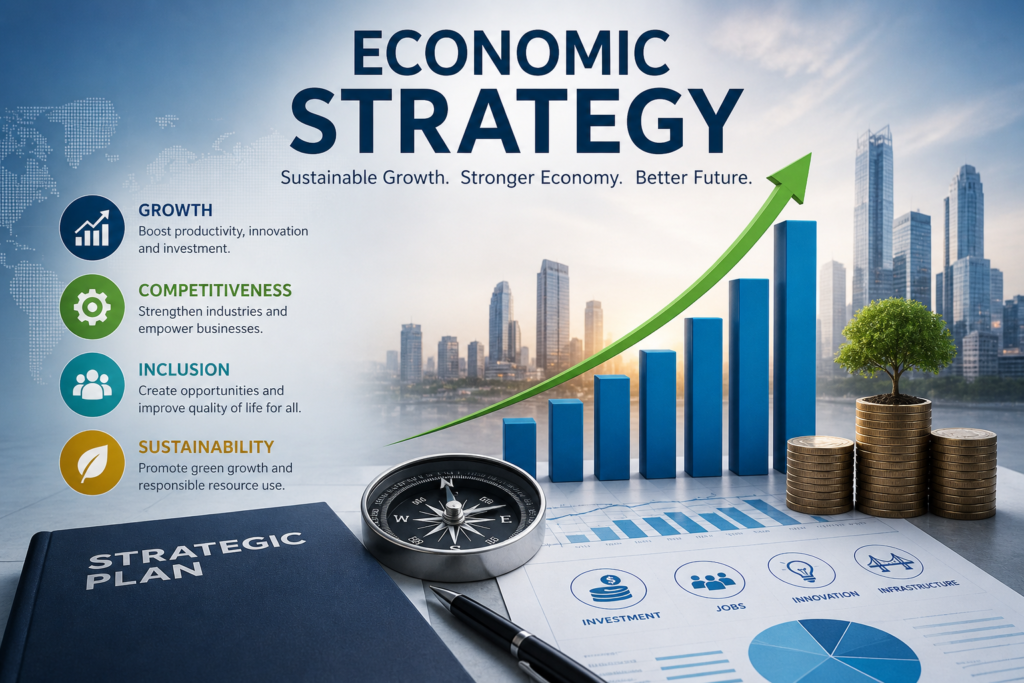
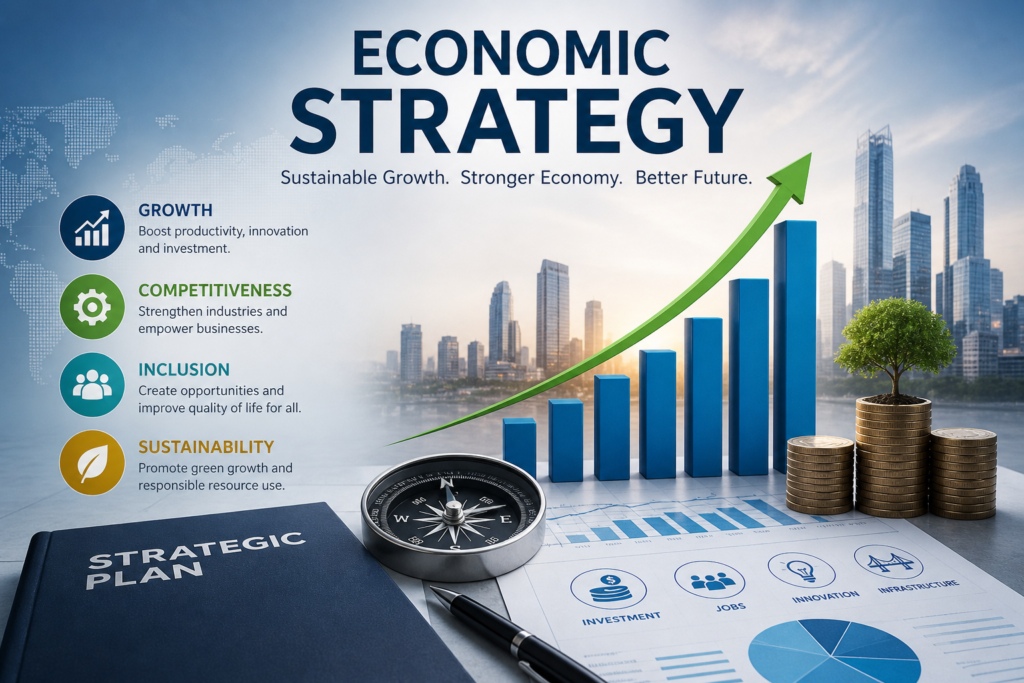
4. 💰 Economic Strategy
Economic strength often determines political strength:
- Trade policies and export growth
- Foreign investment attraction
- Natural resource management
- Infrastructure development
Countries with strong economies tend to have stronger global influence.
5. 🤝 Diplomacy & Alliances
Political strategy internationally often includes:
- Building alliances and partnerships
- Participating in international organizations
- Negotiating treaties (trade, security, climate, etc.)
- Conflict resolution through diplomacy
6. 🧠 Information & Narrative Power
Modern political strategy also involves:
- Public communication and messaging
- International image management
- Media and digital influence
- Legitimacy and trust-building
This is often called “soft power projection.”
7. ⚖️ Legitimacy & Governance
Long-term political success usually depends on:
- Rule of law
- Transparent institutions
- Accountability
- Public participation in governance
Without legitimacy, even strong systems become unstable.
🧩 Big Picture
Globally, political strategy is less about “winning” and more about:
- Maintaining stability
- Managing resources
- Building relationships
- Protecting national interests
- Avoiding conflict while advancing influence