


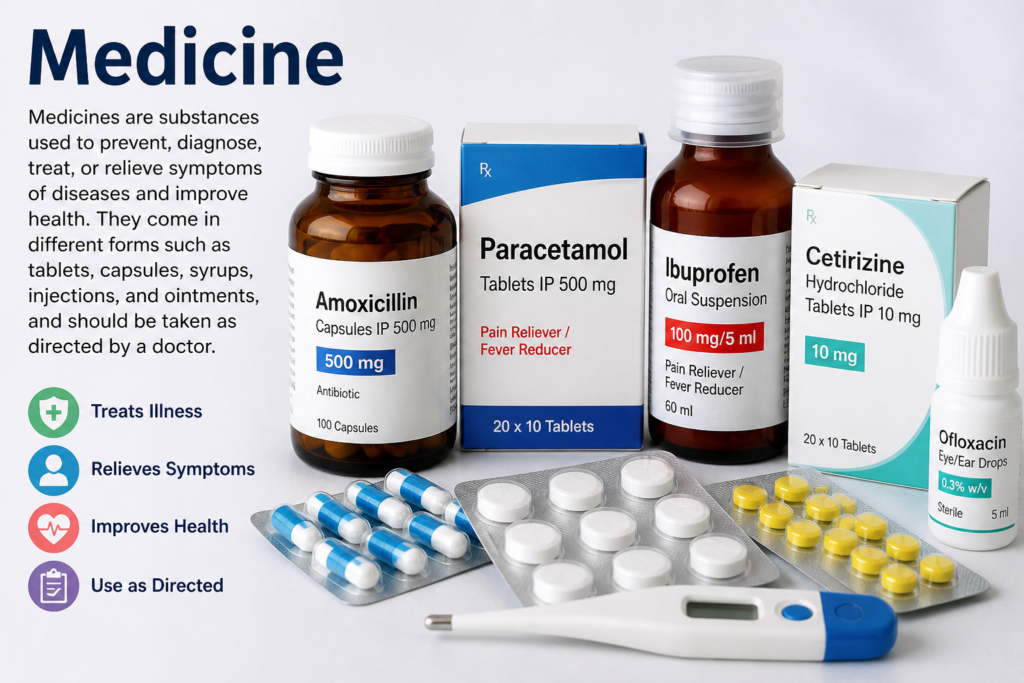
Describtion:This image shows a collection of common medicines arranged in a clean, clinical setting. It includes tablets, capsules, and liquid medication in bottles and blister packs. The packaging is neatly labeled, reflecting modern pharmaceutical standards

1. Start with structure (don’t improvise)
Medical writing usually follows predictable formats. Use them—they exist for a reason.
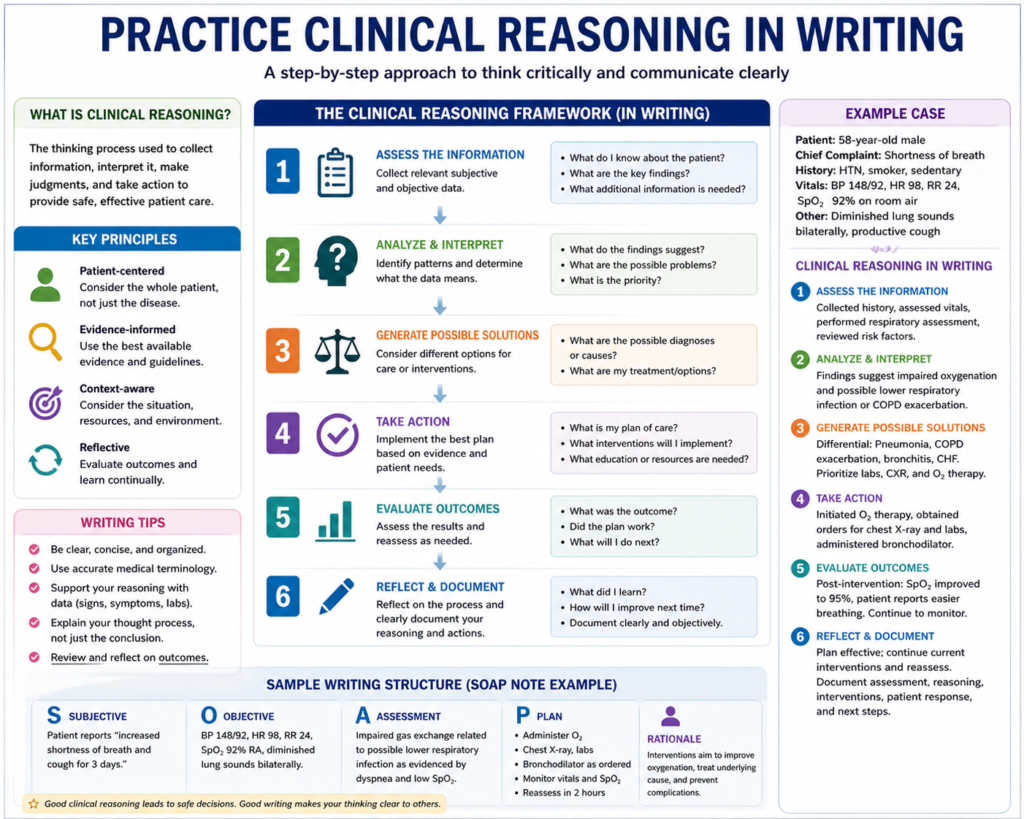
- Clinical notes: SOAP format
- Subjective (what the patient says)
- Objective (exam findings, vitals, labs)
- Assessment (diagnosis or impression)
- Plan (treatment, next steps)
- Case reports / exams:
- Introduction → History → Examination → Investigations → Diagnosis → Management
2. Be concise, not vague
In medicine, extra words can hide important details.
❌ “The patient seems to be kind of unwell with some breathing issues.”
✅ “Patient presents with acute shortness of breath and tachypnea.”
Short, specific statements are better than long, unclear ones.
3. Use standard medical terminology
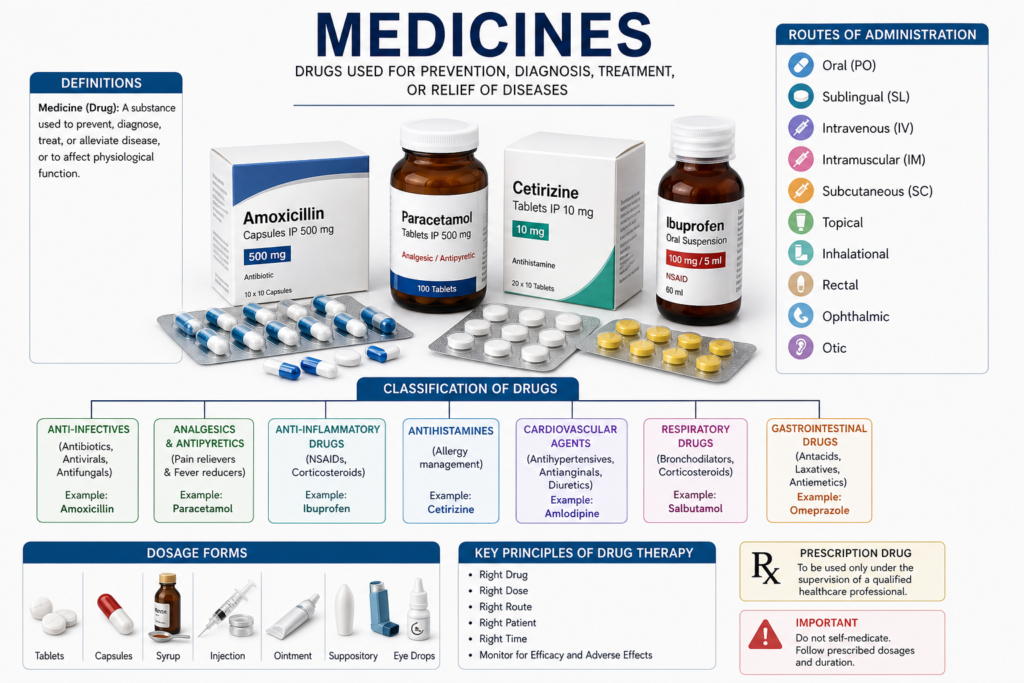
Avoid casual language. Use accepted clinical terms.
- Say “hypertension” instead of “high blood pressure” (unless writing for patients)
- Say “myocardial infarction” instead of “heart attack” in formal writing
4. Prioritize relevance
Only include what matters clinically.
If a patient has chest pain, don’t spend time describing unrelated minor details unless they affect diagnosis.
5. Follow logical flow
Information should move in a way that mirrors clinical reasoning:
Symptoms → Signs → Tests → Diagnosis → Treatment
If your writing jumps around, it becomes hard to follow.
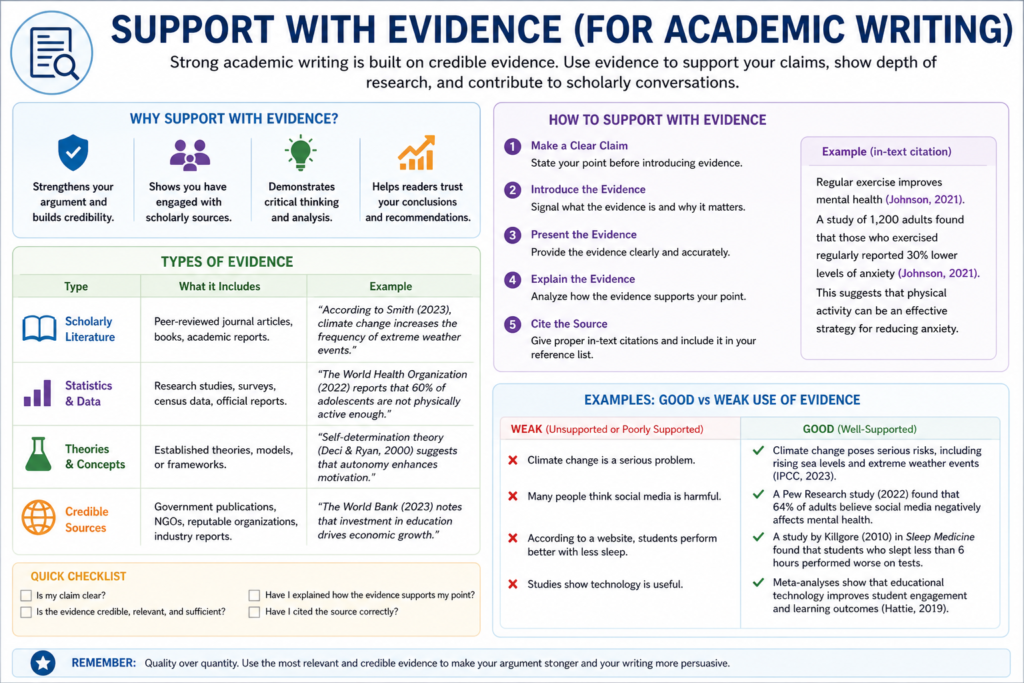
6. Support with evidence (for academic writing)
When writing essays or research:
- Reference guidelines (e.g., World Health Organization)
- Cite journals like The Lancet or New England Journal of Medicine
This shows your writing is not just opinion.
7. Use clear formatting
Even good content becomes unreadable if it’s messy.
- Use headings
- Use bullet points when appropriate
- Separate sections clearly
8. Avoid common mistakes
- Don’t overuse abbreviations (write full term first)
- Don’t include personal opinions without evidence
- Don’t be overly wordy

9. Practice clinical reasoning in writing
Good medical writing shows thinking, not just facts.
Example:
Instead of listing symptoms randomly, connect them:
“Chest pain radiating to the left arm with elevated troponin suggests acute coronary syndrome.”
10. Adapt to your audience
- Doctors: technical, detailed
- Patients: simple, clear, less jargon
- Exams: structured, to-the-point