


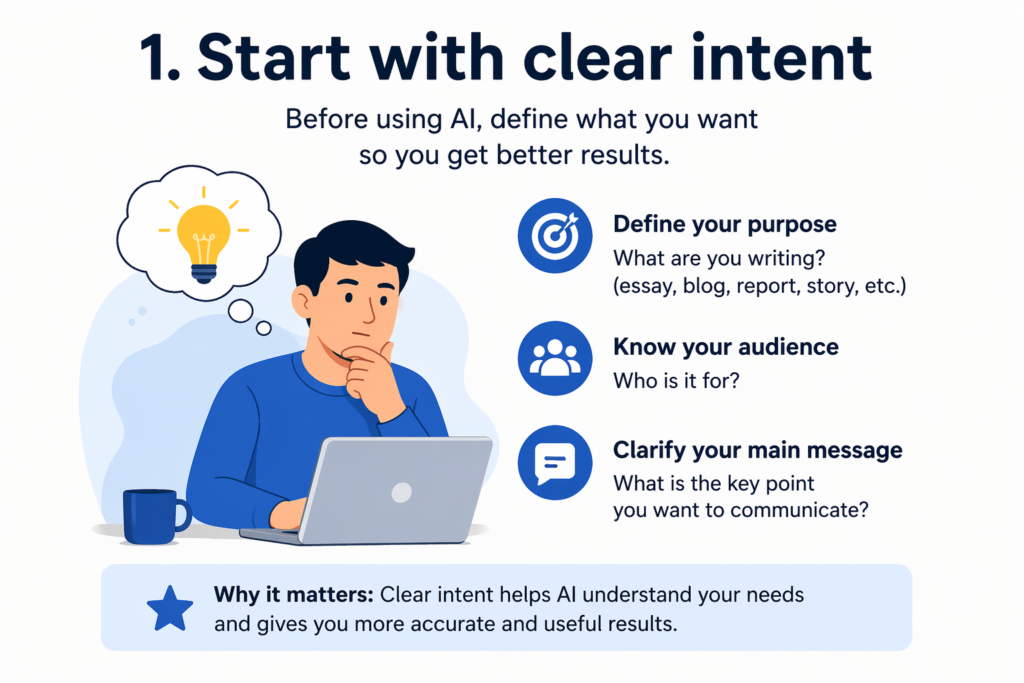
1. Start with clear intent
DESCRIBTION:Artificial Intelligence (AI) is the ability of machines or computer systems to perform tasks that normally require human intelligence.
- What are you writing? (essay, blog, report, story)
- Who is it for?
- What’s the main message?
Then prompt AI with that context. Vague prompts = vague writing.
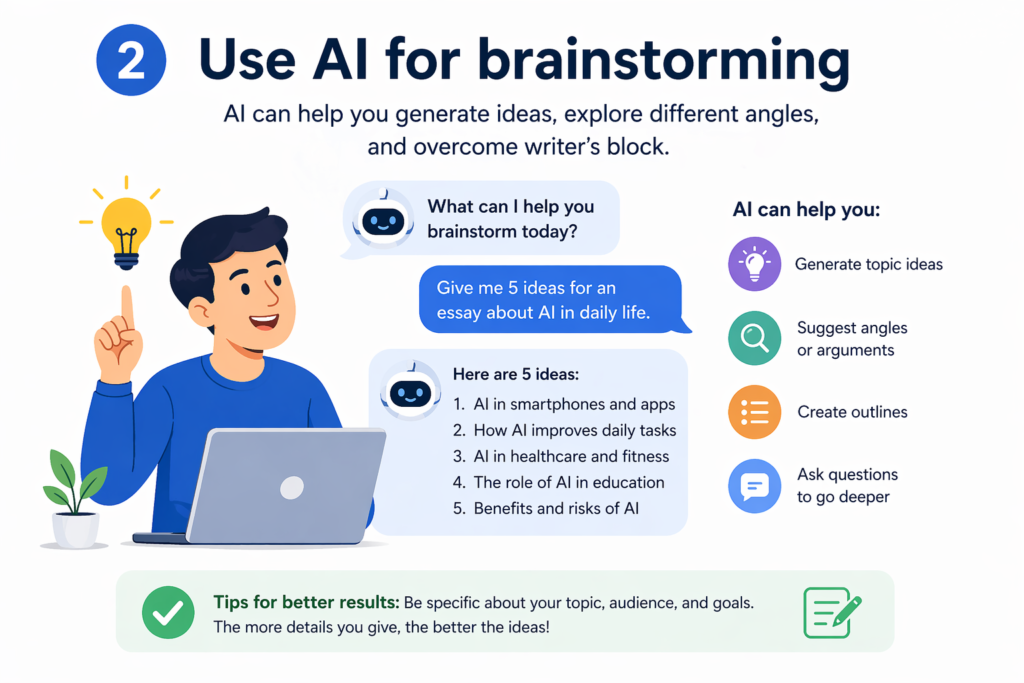
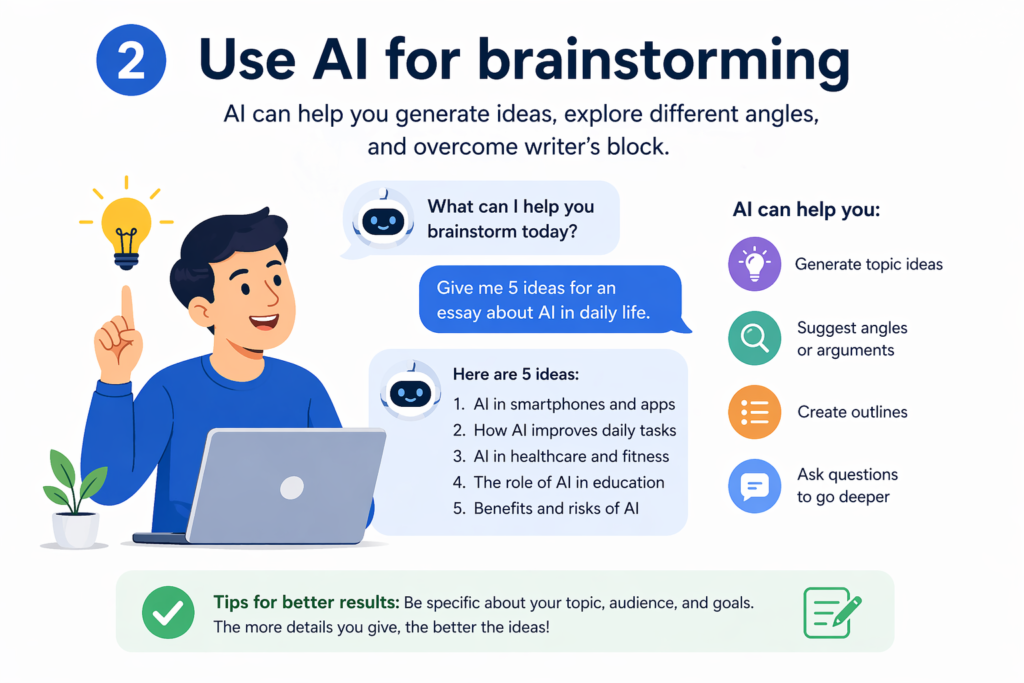
2. Use AI for brainstorming
Ask AI to:
- Generate topic ideas
- Suggest angles or arguments
- Create outlines
Example:
“Give me 5 strong arguments for an essay about climate change solutions”
This saves time and helps you avoid writer’s block.
3. Build a structured outline
Good writing = good structure.
Use AI to create:
- Introduction idea
- Main points (2–5 sections)
- Supporting details
- Conclusion direction
Then adjust it yourself so it matches your voice.
4. Draft in sections (not all at once)
Instead of:
“Write my full essay”
Do:
“Write the introduction for…”
“Expand point 2 with examples…”
This gives you more control and better quality.
5. Edit critically (this is where most people fail)
AI drafts are often:
- Too generic
- Repetitive
- Slightly inaccurate
You should:
- Rewrite sentences in your own tone
- Add real examples or personal insight
- Remove fluff
Think of AI as a rough draft generator, not the final author.Once your limit resets, ask me again and I’ll generate the “Edit critically (this is where most people fail)” image for you 👍
6. Use AI for polishing
Ask AI to:
- Improve clarity
- Fix grammar
- Simplify complex sentences
- Adjust tone (formal, casual, persuasive)
7. Fact-check important content
AI can make mistakes. For serious writing (academic, professional), verify:
- Data
- Quotes
- Claims
8. Keep your voice
The biggest mistake: sounding like everyone else using AI.
Add:
- Personal opinions
- Unique phrasing
- Real experiences
That’s what makes writing stand out.
Simple workflow
- Idea →
- AI brainstorm →
- Outline →
- Section drafts →
- Human editing →
- AI polish →
- Final review
1. The Impact of AI on Jobs and the Future of Work
Focus on how AI is changing employment:
- Jobs being replaced vs. new jobs created
- Automation in industries (healthcare, education, business)
- Skills people need in the future
You can argue whether AI is more helpful or harmful to workers.

2. Ethical Issues in Artificial Intelligence
This is a powerful and common topic:
- Bias in AI systems
- Privacy concerns (data collection, surveillance)
- Decision-making (can AI be trusted?)
You can explore whether AI should be controlled and by whom.
3. AI in Everyday Life
Make it relatable and practical:
- AI in smartphones, apps, and social media
- Virtual assistants and recommendations
- Benefits vs. risks in daily use
This works well for simple essays or presentations